Given the high specific power of supercapacitors, installing these modules on aircraft is ideal for operations requiring high-power bursts over short durations—such as actuating ailerons, opening cargo doors, and deploying inflatable emergency slides.

CapTop has partnered on research projects led by Leonardo and the Italian Aerospace Research Centre (CIRA) aimed at addressing architectural challenges associated with aircraft electrification, specifically the need to maintain stable DC bus voltage during high-power operations.

For safety reasons, aircraft-mounted supercapacitor modules can either supplement or entirely replace electrochemical batteries.


The hybrid and fully electric vehicles in the airports, like the planes towing tractors or airport shuttles, are suitable for use of the supercap power storage modules because of short drive taken.

The modules allow often and fast charging/discharging cycles without damage. Moreover, they ensure more benefits especially if fitted along with a KERS, absorbing and storing braking power and providing burst power to assist the ignition and acceleration operations.

When fitted on the planes towing tractors or on the airport shuttles, in case of hybrid vehicles, the supercap power storage modules combined with electrochemical batteries reduce the fuel consumption.

In case of fully electric vehicles, the supercap modules increase efficiency eliminating the harmful emissions in compliance with the environmental policy.

On the airport runways, the supercap power storage modules may be fitted like power storages for photovoltaic systems.

In fact, the accumulated power can be used to feed lighting system. In the affected area, the storage stations may be charged during the day to feed the lighting system during the night.

When used like power storages for the photovoltaic systems to feed lighting system on the airport runways, the supercap power storage modules can completely replace the electrochemical batteries.

They ensure more service stability and efficiency and allow to reduce the maintenance costs.

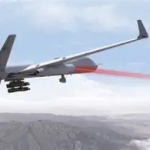
Drone technologies are having an increasingly significant impact on both the civil and military sectors. In this context, the use of supercapacitors alongside high-capacity electrochemical batteries is highly beneficial for managing the power spikes required during brief mission phases—such as takeoff—or for handling pulsed loads caused by specific onboard instrumentation. In the defense sector, it is becoming increasingly evident that traditional air defenses are ill-suited to countering armed drones, as they rely on interceptors that cost two orders of magnitude more than the threats they are meant to engage. There is a growing number of trials involving interceptors based on directed-energy weapons, such as lasers; these can strike and damage a drone in flight with speed and precision, utilizing only small, highly concentrated bursts of energy. Thanks to their compact and lightweight design, supercapacitors can provide the substantial power needed to operate a directed-energy weapon without drawing energy from the interceptor platform’s own power supply—whether that platform is a ground vehicle, a naval vessel, or an aircraft itself—thereby allowing for unrestricted maneuvering even while firing.