


Power quality issues are becoming increasingly common worldwide.
The problem is not limited to prolonged blackouts that fully deplete emergency batteries; it primarily involves micro-interruptions, voltage sags, and transients lasting a few milliseconds or seconds that cause errors in PLCs, CNC machines, inverters, robots, and IT systems.
The damage caused by such events is all the more severe and costly depending on the value added of the affected operations. Consider the potential data loss or failure of large data centers managing strategic data, processes, and systems, or the costs associated with downtime in highly automated industrial plants—often accompanied by increased production waste due to processing defects.
The rise in these issues in recent years is driven not only by the proliferation of sensitive electronic devices and critical loads but also by the energy transition. Power grids must increasingly manage non-dispatchable, intermittent sources—such as solar and wind—that lack the inertia provided by the rotating turbomachinery (fossil-fuel or hydro-powered) that once contributed to grid stability. The proliferation of data centers further exacerbates the problem; they are both sensitive to grid disturbances—risking failure and data loss—and sources of disturbances and transients themselves, due to the extreme variability of their power consumption and rapid, significant load fluctuations.
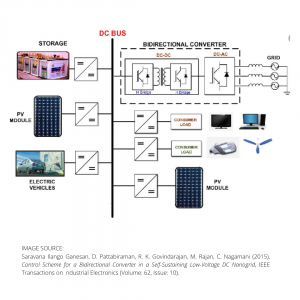
Using supercapacitors to mitigate power quality issues offers an effective solution for both main approaches:
Load protection via UPS or DC backup systems
Grid protection via hybrid BESS (HESS)
In the first scenario, supercapacitors replace lead-acid batteries in conventional zero-transfer-time UPS systems. The advantage lies in the superior reliability and longevity of supercapacitors; in contrast, the continuous charge/discharge cycles associated with zero-transfer-time converters rapidly degrade batteries, compromising reliability—particularly when protecting critical loads such as medical or military equipment. CapTop supplied its SUPER-UPS system to Rome’s Gemelli Hospital to provide zero-transfer-time protection for critical medical loads.
For DC loads—such as server racks in data centers—supercapacitors are integrated into power supply systems to stabilize power and eliminate electrical noise on both the input and output sides. CapTop supplies high-voltage (800V or 400V) DC stabilization systems for data center applications.
In the second scenario, supercapacitors are used alongside electrochemical batteries to reduce response times for grid support. In China, regulations mandate that virtually all BESS (Battery Energy Storage Systems) respond within 5 ms to requests for grid power injection for stabilization purposes, necessitating the integration of supercapacitors into BESS architectures. In Europe, early examples of hybrid BESS—such as the German Statcomm—are currently undergoing trials. Some analysts argue that the catastrophic blackout that struck the Iberian Peninsula in 2025 was caused by the lack of widespread adoption of such solutions.
CapTop offers the “Power Cabinet” product for the implementation of hybrid BESS.